Mental Health in a Digital Age:
When Notifications, Social Media and Stress Collide

Mental Health in a Digital Age: When Notifications, Social Media and Stress Collide
In a world where smartphones, social media and constant notifications have become an integral part of our everyday lives, we face new challenges to our mental health. At Den Kognitive Diamant, where I work with cognitive therapy and mental wellbeing, I see daily how the digital age affects our ability to focus, feel adequate and find calm.
This article looks into how digital habits can lead to stress and poorer mental health – and how we can regain balance through increased focus and conscious use of technology.
Focus and attention under pressure: The hidden price of notifications
In a digital age our attention is constantly under attack. Notifications from social media, emails and apps interrupt our concentration and make it hard to immerse ourselves in tasks. This constant interruption can make us try to focus on several things at once, which can lead to mental fatigue and reduced productivity.
A report from the Danish Health Authority highlights that excessive screen use among children and young people can have a negative effect on the ability to concentrate, which can have long-term consequences for learning and development. Read the report at the Danish Health Authority.
Furthermore, research shows that media multitasking – that is, using several digital media at the same time – can lead to reduced cognitive control and increased stress. See more here.
Social media and self-esteem: When likes define our worth
Social media can both connect us with others and create a sense of community. But it can also lead to comparisons, where we measure our worth in likes and followers. This can affect our self-esteem and lead to feelings of inadequacy.
Low self-esteem often shows as an inner voice that constantly criticises and undermines. It can lead to putting oneself down in social settings, avoiding conflict and being afraid to express one’s own needs. Many try to compensate by being perfect, over-performing or constantly seeking the recognition of others – often on social media. When one’s self-esteem is closely tied to how one is perceived by others, even small signs of rejection can feel overwhelming. Over time this can lead to isolation, stress and a feeling of emptiness. One loses faith in one’s own abilities and in one’s right to take up space. It can also provide fertile ground for anxiety and depression. When likes and comments become the yardstick for whether one “is somebody”, one’s self-understanding shifts from the inner to the outer – and in the long run that wears on self-esteem.

Higher risk of developing depression and feeling lonely
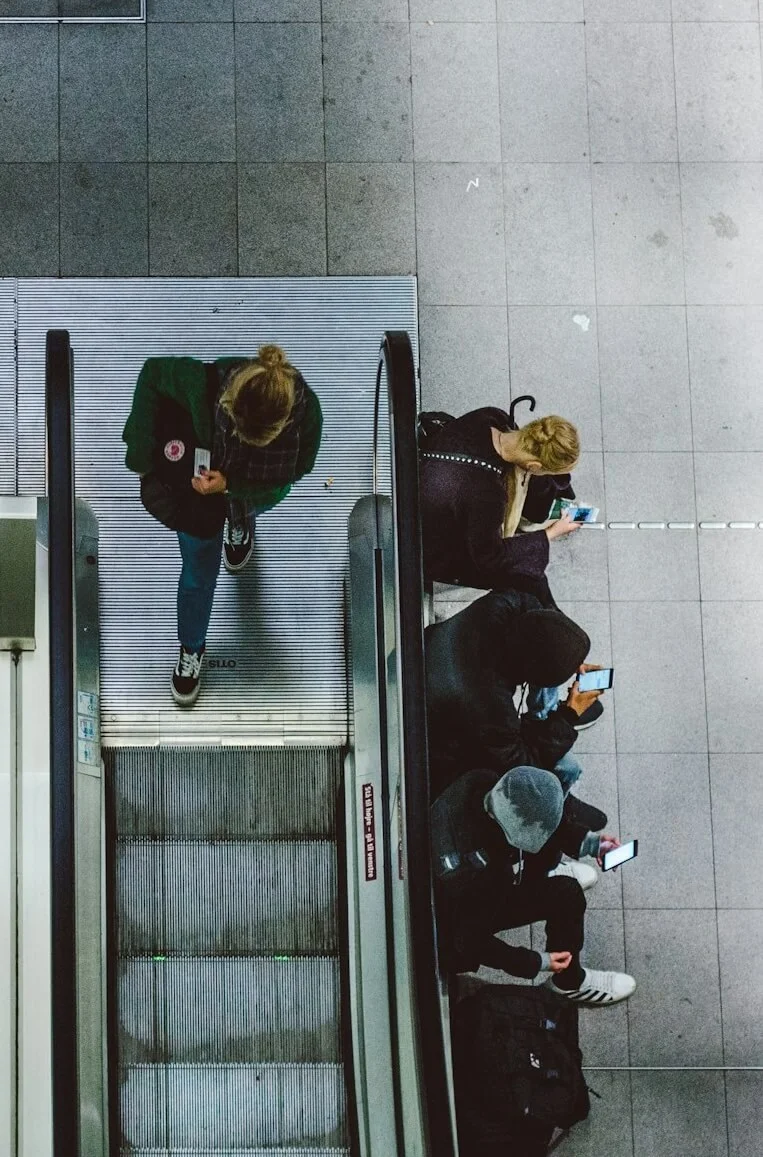
A study from the Danish National Institute of Public Health shows that people who are addicted to social media have a markedly higher risk of developing depression and feeling lonely. Read more about the study here.
Furthermore, a report from the Danish children’s rights organisation Børns Vilkår points out that children and young people feel great pressure from social media, which can lead to stress and a feeling of not being good enough. Read the full report (PDF).
When deep down you feel that you are not good enough, being with other people can be anxiety-provoking. It becomes hard to relax, because you are constantly assessing yourself and wondering what others might think. This form of social anxiety is not about being shy, but about an inner anxiety about being rejected, humiliated or misunderstood. And in a digital world the phone quickly becomes a kind of protection. It can be used to avoid eye contact, small talk or the uncertainty of being present in the moment. It becomes easier to “hide” behind a screen than to be in a vulnerable situation. But that behaviour can also keep you stuck in the anxiety, because you never get to find out that being social can actually go well – even without a filter. In the long run it can reinforce loneliness and cut you off from community and closeness.
Digital stress: When constant availability becomes a burden
The constant availability that technology offers can lead not only to digital stress, but to stress in general. We feel obliged to answer messages immediately, stay up to date and be available around the clock. This can lead to burnout and a sense of never being able to switch off or measure up. Excessive screen time and constantly attending to notifications can lead to feelings of being overwhelmed and to anxiety.
That is because the brain is constantly interrupted and overstimulated. When we constantly have to attend to messages, notifications and information, the brain is prevented from settling and focusing deeply. It activates the body’s stress response again and again – even with small things like a new email or a message. Over time that can wear on the nervous system and lead to mental fatigue, unease and sleep problems. It also creates a sense of never being able to relax completely, because there always “might be something we should answer or check.” The constant state of alert becomes a new normal, where breaks feel wrong and silence almost frightening. When we never allow ourselves to switch off completely, we lose the connection to ourselves and our needs – and that creates fertile ground for stress and burnout.
A digital detox – a conscious break from screens and notifications – can be an effective way to restore balance. By taking time away from the digital world, we can reduce stress and improve our mental health.
Restore the balance: Strategies for strengthening your mental health
To protect our mental health in a digital age, it is important to implement strategies that help us find balance. Here are five recommendations you can start using today:
- Set limits on screen time: Decide on fixed times when you do not use digital devices, especially before bedtime.
- Turn off unnecessary notifications: Reduce interruptions by allowing only important notifications.
- Practise digital minimalism: Choose deliberately which apps and platforms you use. Read about digital minimalism.
- Prioritise offline activities: Pursue hobbies, exercise and social activities without screens.
- Seek professional help: If you experience persistent stress or signs of poor mental health, it can be helpful to talk to a therapist.
Closing thoughts
The digital age has brought many advantages, but also challenges to our mental health. By being conscious of our digital habits and implementing targeted strategies to balance the use of digital media in our everyday lives, we can protect and strengthen our mental wellbeing and achieve a better balance in our lives.
At Den Kognitive Diamant I offer support and tools for navigating the digital world in a way that promotes your mental health.
If you need help, we work together on building healthier self-esteem. The starting point for therapy with me is a collaboration in which we build a trusting alliance. I use tools from cognitive behavioural therapy that help you understand and change unhelpful thought patterns. We work purposefully on building self-esteem by identifying the negative automatic thoughts that often arise when you use social media. Together we challenge the inner beliefs about not being good enough and practise new, more supportive ways of thinking about yourself and your relationships. Through concrete exercises and reflections you learn to stand more firmly in a digital world where comparison and external pressure can otherwise loom large.
I am an authorised psychologist with 19 years’ experience and a specialist in psychotherapy with adults. I have specialised in cognitive therapy and in the treatment of anxiety disorders, OCD, depression, stress and low self-esteem.
I run my practice at AYA House, which is set in quiet, scenic surroundings in the heart of North Zealand. Half of my clients come to me at the practice, while the other half receive treatment online. I also offer treatment to Danes living abroad who are looking for a Danish-speaking authorised psychologist.
Contact me today to find out more about how I can help you find your balance in our digital age.